 Why Quantum Technologies Matter for Our Community
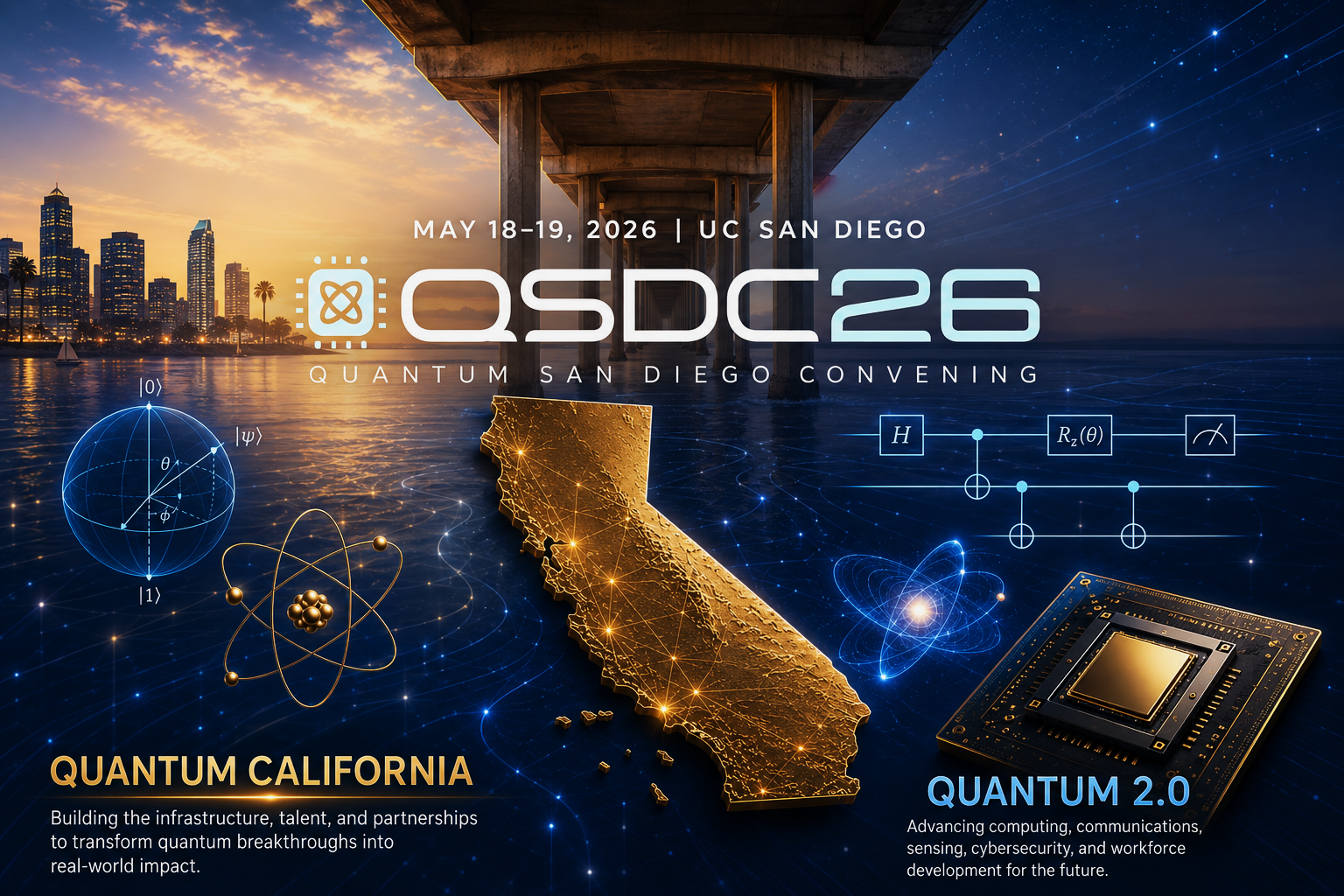
In May, UC San Diego and the Qualcomm Institute hosted the Quantum California San Diego Convening (QSDC26), an event that brought together leaders from academia, industry, startups, government, and national laboratories to discuss the future of California’s quantum ecosystem. The meeting showed how California is positioning itself to become a global leader in quantum science and technology, spanning quantum computing, secure communications, sensing, advanced manufacturing, workforce development, and post-quantum cybersecurity.
For many of us working in optics, photonics, and engineering, quantum technologies may feel like something distant or futuristic. However, one of the strongest messages from this convening was clear: the quantum future may arrive much sooner than we think. As quantum computers continue advancing, they may eventually challenge many of today’s cybersecurity systems, creating an urgent need for post-quantum cryptography and new approaches to secure communications. This is something our scientific and engineering communities should begin preparing for now.
The conference featured important voices from across the quantum landscape, including leading researchers, startup founders, industry leaders, and distinguished scientists, including the 2025 Nobel Prize in Physics John Martinis recognized “for the discovery of macroscopic quantum mechanical tunnelling and energy quantisation in an electric circuit”
California is not only investing in quantum research but also building the infrastructure, talent pipeline, and industry partnerships necessary to transform laboratory breakthroughs into real-world technologies.
At OSSC, we had the opportunity to engage with these developments locally.
In addition, our OSSC President, Donn Silberman, presented in Irvine the talk “Quantum 2.0: Computing, Communications, Sensors & Workforce Development”, offering an accessible overview of the field and explaining how the second quantum revolution is expanding beyond physics laboratories into practical technologies and workforce opportunities. The presentation highlighted key concepts, including superposition, entanglement, quantum computing architectures, quantum networking, cybersecurity, and the educational pathways needed to prepare the next generation of scientists and engineers.
For those curious about quantum science but unsure where to begin, these events remind us that quantum is no longer just a theoretical topic—it is becoming an emerging technological ecosystem with growing opportunities in research, education, and industry throughout California.
We encourage our community to explore the resources below and stay engaged as quantum technologies continue evolving. The future of quantum may be closer than we imagine.